TIBOR NÁDOR (HU)
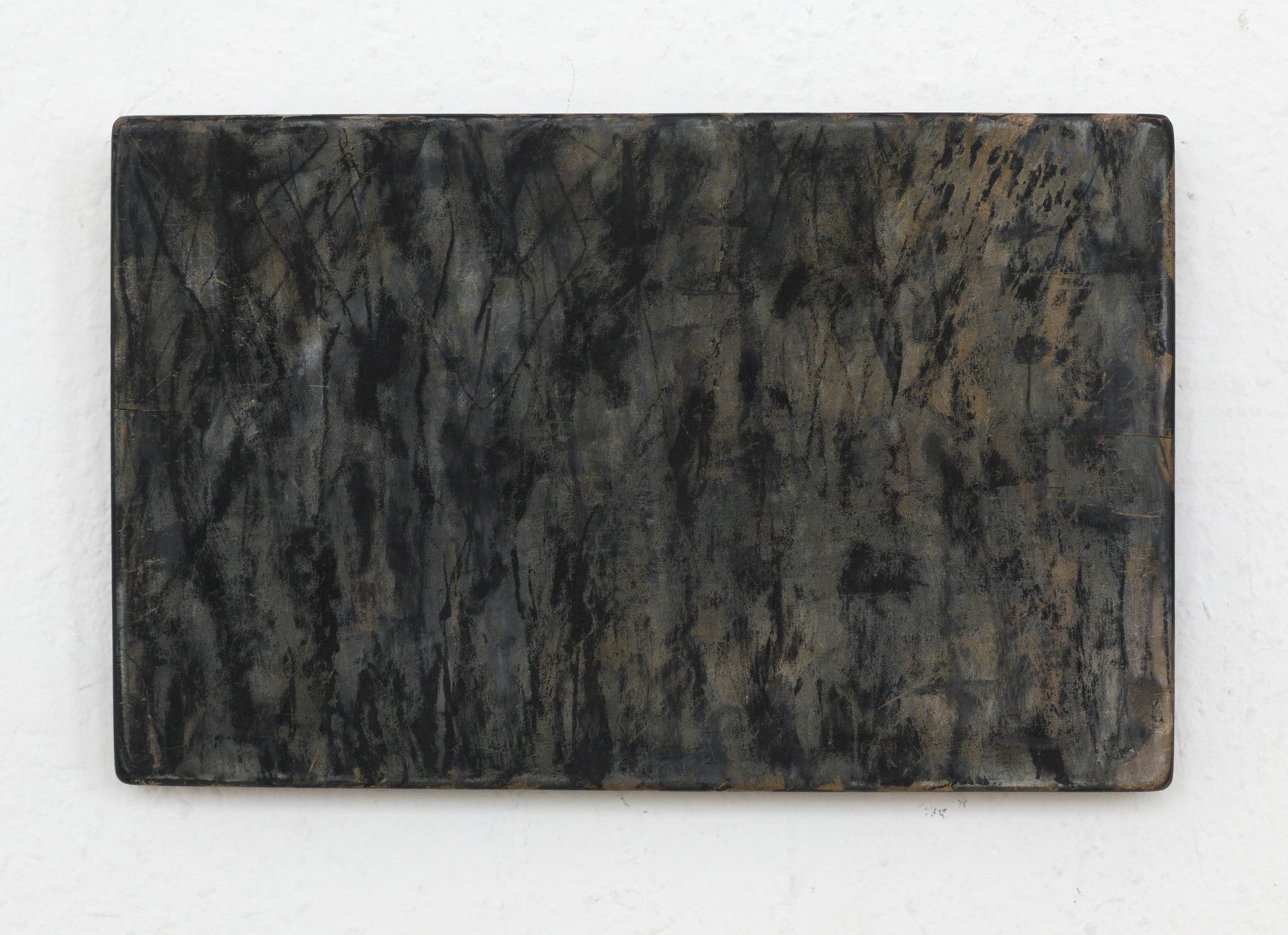
Ritme en geluiden van berkenbast
2021
houtskool, krijt, inkt, snijplank
26 x 41 cm
Birchbark rhythm and sounds
2021
charcoal, crayon, ink, cutting board
26 x 41 cm
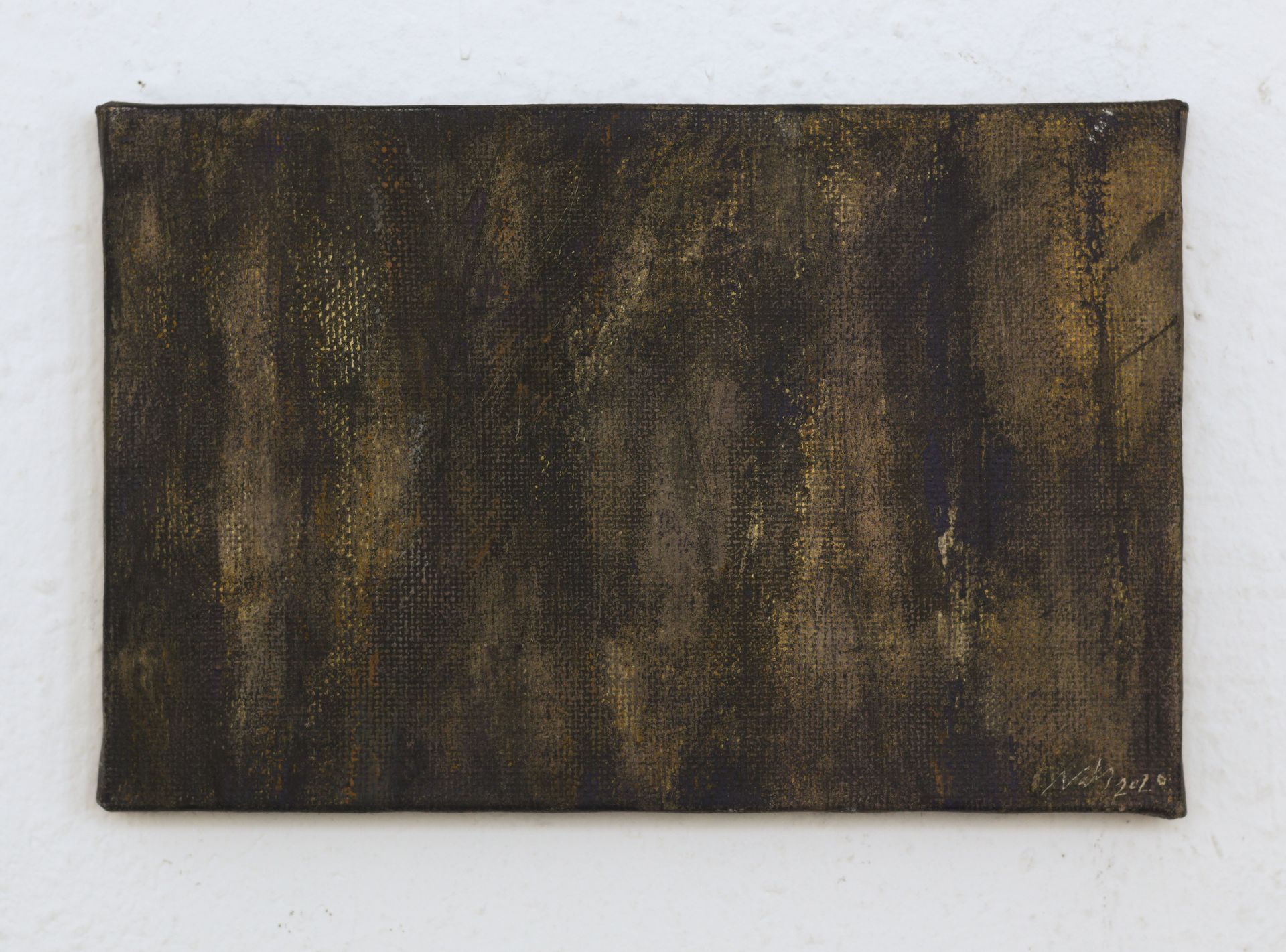
Loo geluiden
2020
olieverf, canvas
21,5 x 32,5 cm
Grove noises
2020
oil, canvas
21,5 x 32,5 cm
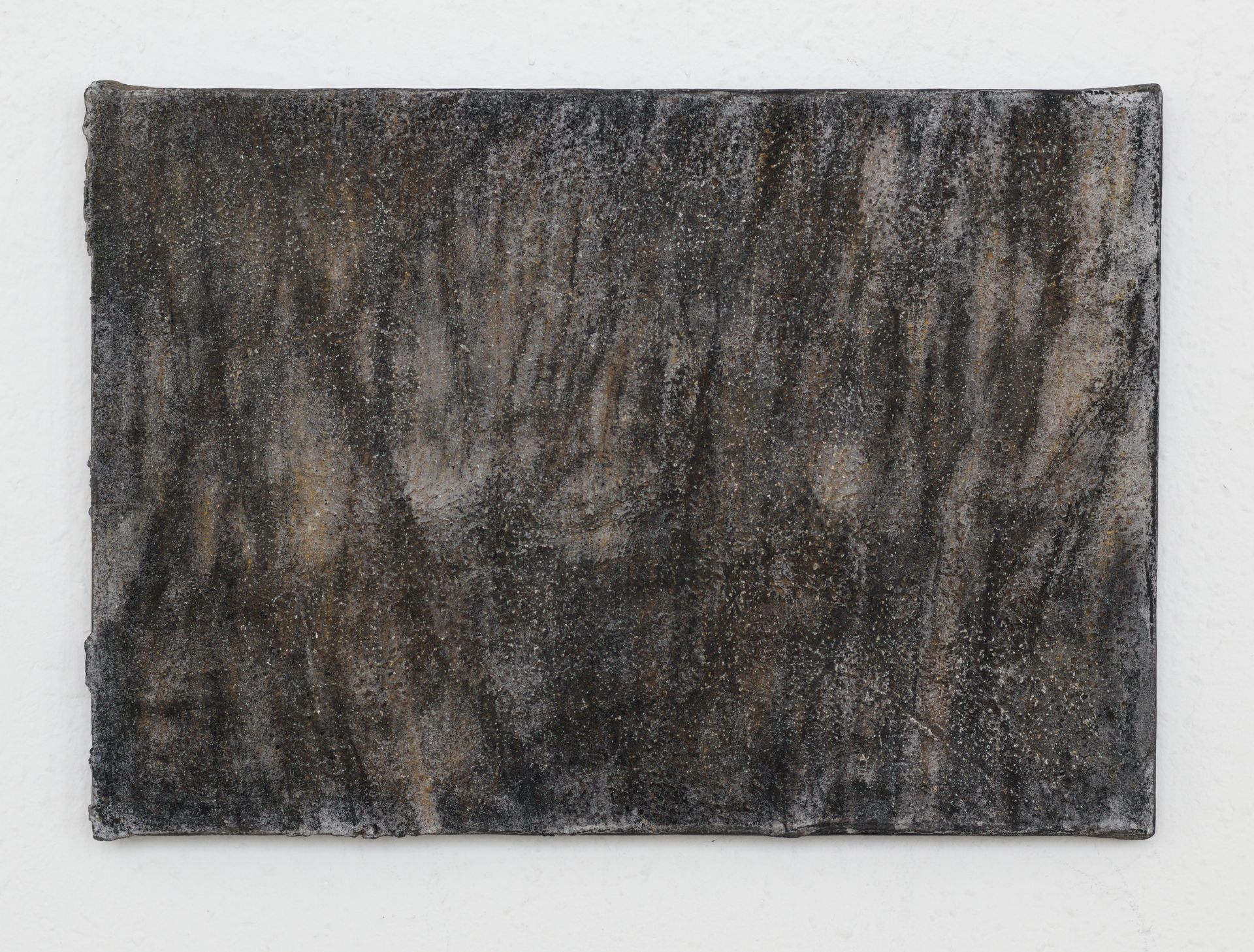
Fluweelzachte lichte tinten (sweet nothings)
2021-2022
houtskool, krijt, pastel, zand, canvas
36 x 50,5 cm
Velvet light tones (sweet nothings)
2021-2022
charcoal, crayon, pastel, sand, canvas
36 x 50,5 cm
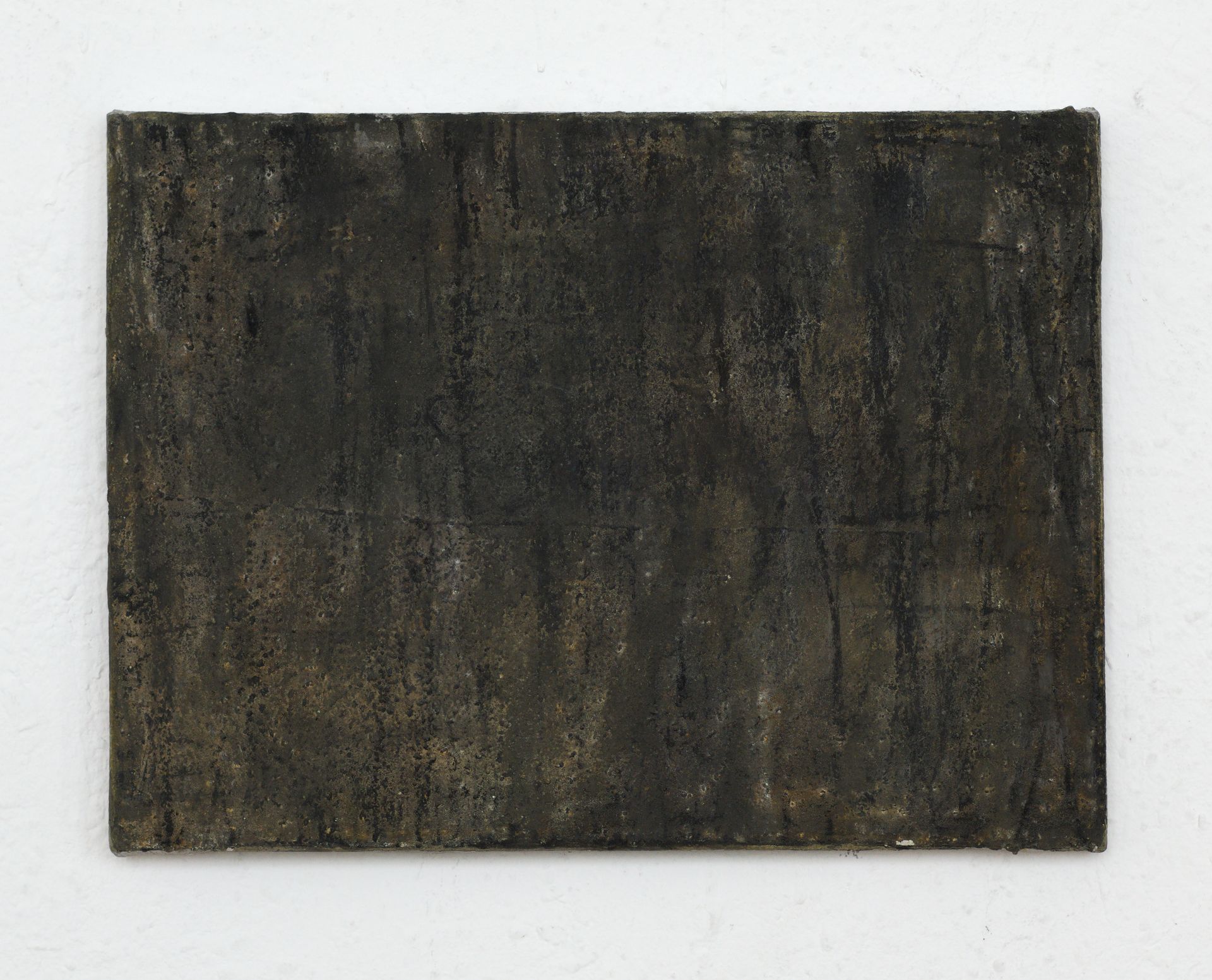
Geluidsvisualisatie van een uiterwaardenbos
2021-2022
houtskool, inkt, zand, canvas
30 x 40 cm
Floodplain forest sound visualization
2021-2022
charcoal, ink, sand, canvas
30 x 40 cm
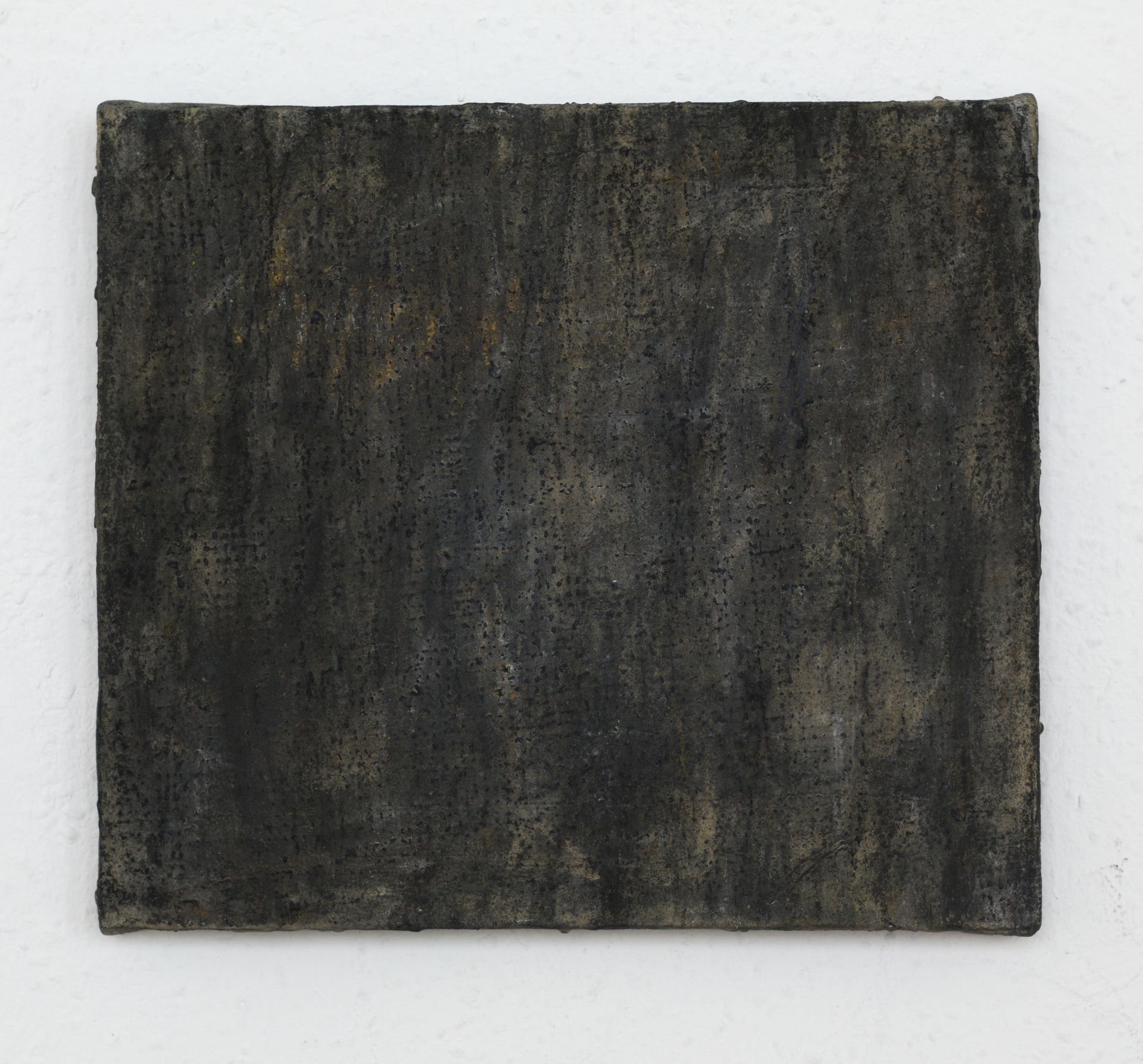
Hergebruik van herinneringen aan het bos (boomgeluiden)
2021
houtskool, krijt, pastel, olieverf, zand, canvas
35,5 x 40,5 cm
Forest reminiscence upcycling (tree noises)
2021
charcoal, crayon, pastel, oil, sand, canvas
35,5 x 40,5 cm
ONTBERGEN (negende kamer)
"Stilstaand beeld, bewegend licht
Als we vanuit het perspectief van ervaringen bekijken wat de drijvende kracht en het uitgangspunt vormt van mijn verkenningen en mijn beelden, dan zou je, beknopt en erg onnauwkeurig, kunnen zeggen dat het het bos is. Als dat voor mij niet genoeg is (en dat is het niet), en ik wil verder verduidelijken welke ervaring de creatie van het beeld precies motiveerde, dan moet het het beeld zelf zijn. Het beeld, eenmaal gevormd, is in zijn uiteindelijke vorm in staat een spektakel, een ervaring, op zich te worden.
Wat zien we immers als we door een bos lopen? Wat is de ware ervaring? Het is niet het bos, niet in de eerste plaats. Evenmin zijn het de bomen. In het geval van zowel de boom/bomen als het bos geldt dat wanneer we zeggen dat we ze zien, dan veronderstelt dat een stand-punt van waaruit we het geheel kunnen overzien, van waaruit we kunnen zeggen: 'Kijk, dit is het!' Net zoals we relatief gemakkelijk doen met een figuur, een object, of, in zekere zin, zelfs met een berg.
Wanneer we door een bos dwalen, zien we onder alle omstandigheden altijd slechts een bepaald deel, een detail van wat we een bos of een boom noemen - datgene wat we beschouwen als een bos of een boom. Daarbij wordt nog niet eens de fundamentele vraag beantwoord of de ruimte tussen de bomen die het bos vormen, deel uitmaakt van het bos of niet.
Wat we zien, zijn in wezen in elk geval kleinere, onafhankelijke, abstracte visuele eenheden, visuele ervaringen en visuele genoegens. We ervaren deze, mede dankzij beweging, als steeds rijkere ervaringen. Deze steeds rijker wordende opeenstapeling van ervaringen vormt in ons bewustzijn een bos, niet in de laatste plaats omdat we leren dat de som van deze ervaringen het bos is. Dit is het punt waarop de primaire ervaring(en) een concept worden. Als zodanig kunnen ze nauwelijks iets overbrengen wat voor mij de ware, essentiële ervaring van het bos is.
In mijn ervaring ontvouwt het beeld zich precies andersom.
Als ik het nader, is de eerste - misschien zelfs onuitgesproken - waarneming dat het duidelijk een object is, nog voordat we er meer over weten. Een object met een eigen omvang, oppervlak, dikte en afmetingen. Door deze waar te nemen, ontdekken we de steeds meer gedifferentieerde lagen, zoals de kleuren, het ritme en de texturen. In wezen onthult alles zijn onderdelen binnen zijn eenheid, en zijn eenheid binnen zijn onderdelen.
Aandacht, de beweging van de blik en vervolgens de uitbreiding ervan, zijn hier de belangrijkste motieven. Deze beweging wordt mogelijk gemaakt door licht. Licht dat de beweging en uitbreiding van de aandacht stuurt.
Voor mij onthult deze aandacht geen motieven - immers, in mijn 'bos'-schilderijen is het bijna onmogelijk om een element met een duidelijke omvang, een begin en een einde te vinden tussen de vormen en gebaren.
Deze aandacht onthult veeleer het beeld zelf als een soort visueel weefsel, een spektakel dat de kijker kan boeien en hem zo een ervaring van een dicht, gelaagd bestaan kan bieden."
Tibor Nádor, juni 2026
Tibor Nádor, ° 1967, Boedapest (HU), woont en werkt in Boedapest
UNCONCEAL (ninth room)
"Still Image, Moving Light
If we examine, from the perspective of experiences, what constitutes the driving force and the starting point of my explorations and my images, then, briefly and very imprecisely, one could say it is the forest. If that is not enough for me (and it isn't), and I wish to further clarify exactly what experience motivated the creation of the image, it must be the image itself. The Image, once formed, is capable in its final form of becoming a spectacle, an experience, in and of itself.
After all, what do we see when we walk through a forest? What is the true experience? It’s not the forest, not primarily. Nor is it the trees. In the case of both the tree/trees and the forest, it is true that when we say we see them,
that presupposes there is a vantage point from which we can view the whole, from which we could say, 'Look, this is it!' Just as we do relatively easily with a figure, an object, or, in a certain sense, even with a mountain.
When wandering through a forest, what we see under all circumstances is always only a certain part, a detail of what we call a forest or a tree - that which we believe to be a forest or a tree.
That’s not even addressing the fundamental question of whether the space between the trees that make up the forest is part of the forest or not.
In every instance, what we see in essence are, smaller, independent, abstract visual units, visual experiences, and visual pleasures. We experience these, partly thanks to movement, as increasingly rich experiences. This ever-enriching accumulation of experiences is what becomes a forest in our consciousness, not in the least because we learn that the total of these experiences is the forest. This is the point at which the primary experience(s) become a concept. As such, they can barely convey anything that is, for me, the true, essential experience of the forest.
In my experience, the image unfolds exactly the other way round.
As I approach it, the first - perhaps even unarticulated - perception is that it
is clearly an object, even before we know more about it. An object with its own extent, surface, thickness, and dimensions. By perceiving these, we arrive at its increasingly differentiated layers, such as its colors, rhythm, and textures. Essentially, everything reveals its parts within its unity, and its unity within its parts.
Attention, the movement of the gaze, and then its expansion, are the main motifs here. This movement is made possible by light. Light, which guides the movement and expansion of attention.
For me, this attention does not reveal motifs - after all, in my 'forest' paintings, it’s nearly impossible to find an element with a definite extent, a beginning, and an end, among the forms and gestures.
Rather, this attention reveals the image itself as a kind of visual fabric, a spectacle capable of captivating the viewer that, as such, can reveal to them an experience of a dense, layered existence."
Tibor Nádor, June 2026
Tibor Nádor, ° 1967, Budapest (HU), lives and works in Budapest
www.instagram.com/tibornador_artist