ÁGOTA VERES (HU)
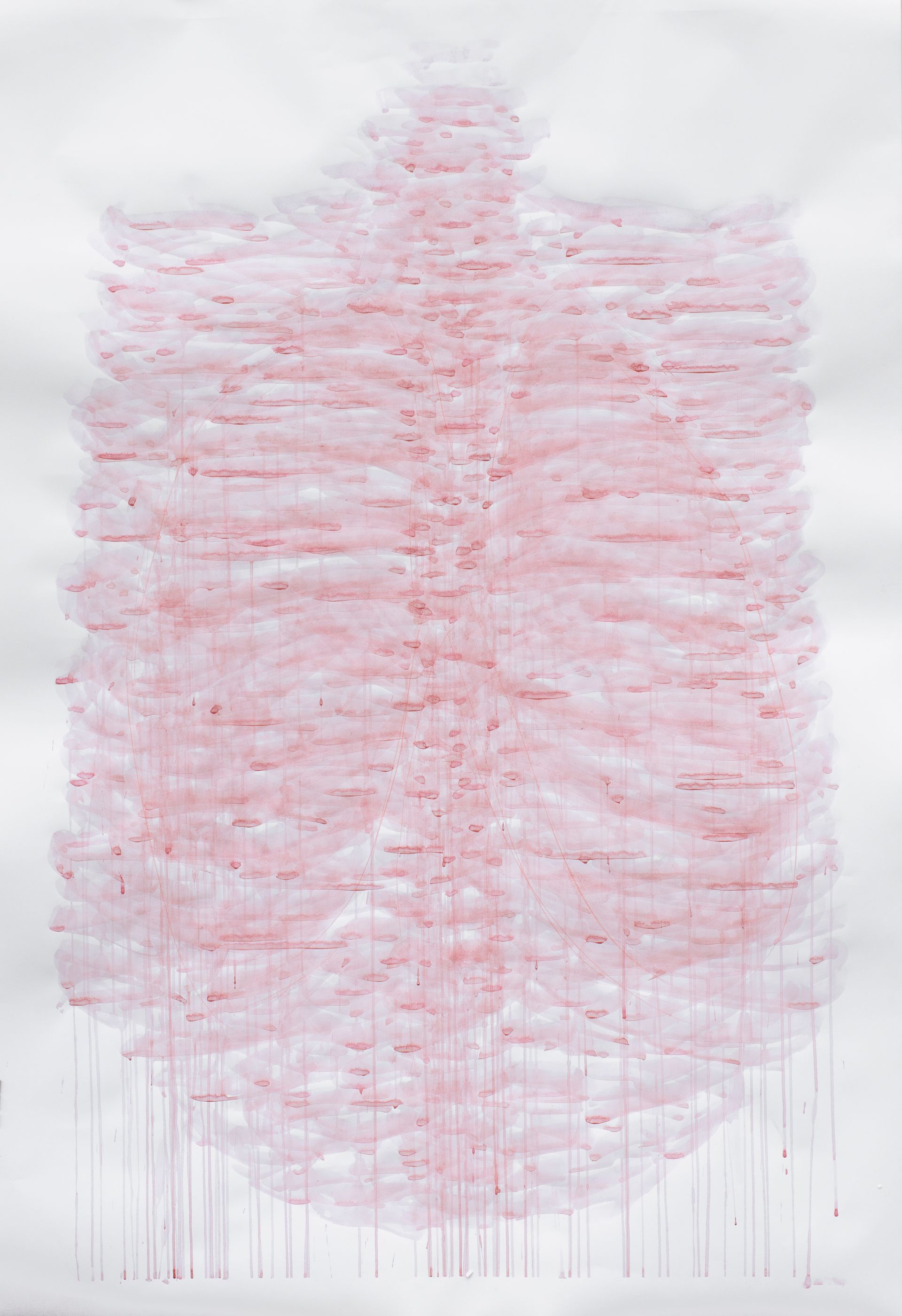
Castillo Interior (Innerlijk kasteel)
2026
acryl op papier
146 x 98 cm
Castillo Interior (Inner Castle)
2026
acrylic on paper
146 x 98 cm
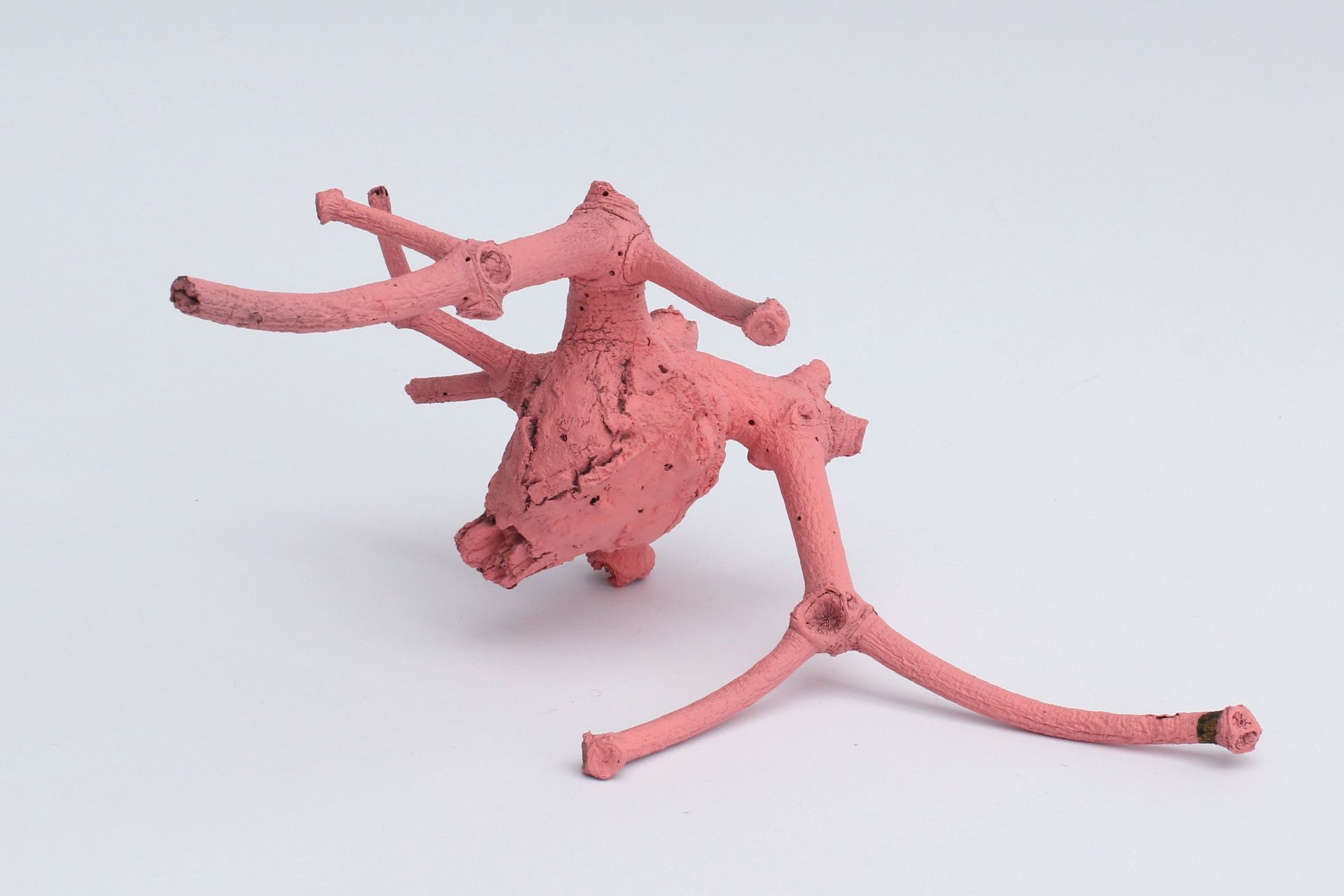
Hart
2026
acryl en maretak
10 x 25 x 20 cm
Heart
2026
acrylic and mistletoe
10 x 25 x 20 cm
WAT IS DENKEN? (vierde kamer)
"'Castillo Interior (Innerlijk kasteel)'
Dit is het kasteel van Teresa van Ávila, de stichteres van de Orde van de Ongeschoeide Karmelieten. Het prach-tige gebouw verscheen aan haar in een innerlijk visioen en symboliseert de menselijke ziel.
Het kasteel heeft in totaal zeven vertrekken en kan worden opgebouwd uit lagen, als een ui, waarbij de schillen het zaad van de plant beschermen. De vertrekken lopen in elkaar over, waarbij het zevende het meest beschermd en stralend is, in wiens geheim de Heer zelf verblijft.
Als ik er bewust naar verlang, kan ik het zaad van mijn ziel naderen om bij God te zijn. Ik ervaar hoe ik het eerste vertrek binnenga, dat slechts door een dunne muur van de duisternis wordt geschei-den. Het pad leidt van hieruit nog dieper, naar het tweede, en dan steeds verder naar binnen, zover de goddelijke genade het toelaat en zover ik het kan verdragen. Er is iets vreemds aan, wat ook de heilige Teresa noemt, namelijk dat de mens altijd in zijn ziel verblijft, dus waarom zou hij daar apart binnengaan? De reden hiervoor is dat de ziel tijdens haar verblijf in de kamers eigenschap-pen ervaart die veel diepere lagen raken dan in het dagelijks leven. Toegang moet daarom voorafgegaan worden door een innerlijke beslissing. Maar hoe moet ik me dat voorstellen? Schitterend, transparant, kristalhelder, opgebouwd uit schelpen, ranken en bloemblaadjes. De menselijke romp, de wervelkolom en de ribbenkast zijn zichtbaar. Het hele lichaam beweegt in een delicate ademhaling, tegelijk symmetrisch en asymmetrisch.
Alleen het hart ontbreekt in het beeld. Het is erbuiten geplaatst, als een object, bedoeld om te observeren.
'Hart'
'Dilatasti cor meum' (Ps 119, 32)
'U hebt mijn hart verruimd'
Het lichaam van een maretak, roze gekleurd door de wind. Het vormt een klein hartje, met slagaders en aders, de spiervezels en kleine wondjes zijn van dichtbij bijna zichtbaar.
Ik vond het en raapte het op in het bos van het Karmelietenklooster in Magyarszék. Het groeide oorspronkelijk aan een tak van een es, misschien kon die zichzelf niet meer dragen, brak af en viel op het pad. Het scheurde zich los van het lichaam, waardoor het zelfstandig kon groeien.
Mijn borst, longen, hart, handen, pupillen, zelfs mijn hele lichaam, mijn habitus, trekken samen en zetten dan weer uit. Volgens sommige mystieke heiligen is de ziel ook zo. Ze zeggen ook dat het centrum van de ziel niet in het hart ligt, maar nog dieper.
Zolang ik leef, klopt mijn hart, en ik bepaal het ritme niet. Het klopt onvrijwillig, tot het allerlaatste moment. Ik vraag me af hoe het voelt als het zo klopt. Ik kan me voorstellen dat het gebeurt, en ik zie zelfs het ritme en de emotionele stroom erachter, het mentale beeld van hoe het beeft van eenzaamheid, liefheeft met toewijding, of vervuld is van ondefinieerbare vreugde. Dit is niet zomaar een onvrijwillige dorst naar leven."
Ágota Veres, juli 2026
Ágota Veres, ° 1972, Beregszász (UA), woont en werkt in Visegrád (HU)
WHAT IS THINKING? (fourth room)
"'Castillo Interior (Inner Castle)'
It is the castle of Teresa of Ávila, the founder of the Discalced Carmelite order. The beautiful building appeared to her in an inner vision and symbolizes the human soul.
The castle has seven apartments in total, and it can be built in layers, like an onion, the skins protecting the seed of the plant. The apartments open into each other, the most protected and radiant being the seventh, in whose secret the Lord himself resides.
If I actively want to, I can approach the seed of my soul to be with God.
I experience myself entering the first apartment, which is separated from the darkness only by a thin wall. The path from here leads even deeper, to the second, and then further and further in, as far as divine grace allows and as far as I can bear. There is a strange thing about it, which Saint Teresa also mentions, i.e. that a human being always resides in their soul, so why should they enter there separately? One reason for this may be that the soul encounters qualities that affect much deeper regions when passing through the rooms than in everyday life, so entry must be preceded by an inner decision. But what should I imagine it to be like? Brilliantly bright, transparent, crystalline, built of shells, tendrils, petals. The human torso, the spinal column and the rib cage are visible. The whole body is in delicate breathing movement, at once symmetrical and asymmetrical.
Only the heart is missing from the picture. It has been placed outside, like an object intended for observation.
'Heart'
'Dilatasti cor meum' (Ps 119, 32)
'You have expanded my heart'
The body of a mistletoe branch, blown in pink. It forms a smaller heart, with arteries and veins, and you can almost see the textures resembling muscle fibers up close, with the small injuries on it.
I found it and picked it up in the forest of the Carmelite monastery in Magyarszék. It originally grew on the branch of an ash tree, perhaps it couldn’t hold itself up, broke off and fell onto the path. It tore itself out of the body, which allowed it to grow on itself.
My chest, lungs, heart, hands, pupils, even my entire body, my habitus, contract and then expand. According to some mystical saints, the soul is like that too. They also say that the center of the soul is not in the heart, but lies even deeper.
As long as I live, my heart beats, and I don’t decide on its beat. It beats involuntarily, until the last moment. I wonder what it feels like when it beats like that. I imagine it happening, and I can even see the beat and the emotional train behind it, the mental image of how it trembles with loneliness, loves with devotion, or is filled with indefinable joy. This is not just an involuntary thirst for life."
Ágota Veres, July 2026
Ágota Veres, ° 1972, Beregszász (UA), lives and works in Visegrád (HU)